
Lifting gear doesn’t usually fail in dramatic ways, it fails quietly, after a run of small “close enough” decisions.
On busy Sydney sites, the real challenge isn’t knowing that inspections matter; it’s building a repeatable system that survives shift changes, shutdown pressure, and procurement swaps, especially when teams are sourcing lifting accessory products online and need confidence that selection, traceability, and inspection routines stay aligned.
If inspection frequency is vague, documentation gets messy, and “we checked it” becomes impossible to prove when it matters most.
Why inspection frequency is an operations problem, not a paperwork problem
Inspection and testing frequency sits at the intersection of safety, uptime, and accountability.
Too infrequent, and you increase the chance of using degraded gear; too frequent without a plan, and people start treating checks as a box-tick that everyone assumes someone else handled.
Most sites end up with an informal rhythm, pre-start glances, occasional deeper checks, and a scramble before audits, and that’s where gaps form.
A simple, visible schedule is often the difference between a controlled process and a reactive one.
Common mistakes that create audit headaches and risk
The first mistake is treating all lifting and rigging equipment as if it has the same exposure and consequences.
A shackle used daily in salty, wet conditions should not live on the same interval as a spreader bar stored clean and used monthly, even if both look “fine” today.
The second mistake is relying on memory instead of traceability, no unique IDs, no register, and no clear separation between “pre-use check,” “periodic inspection,” and “formal test/verification” where applicable.
Another common issue is mixing incompatible records: a tag says one date, a spreadsheet says another, and a contractor report sits in someone’s inbox.
People also underestimate how quickly gear ownership changes, especially when items move between crews, subcontractors, and storage cages.
The last mistake is writing an interval that sounds good on paper but can’t be done with the staffing and access reality on site.
Decision factors to set the right inspection approach
Start with usage intensity: how often the item is used, how hard it’s loaded, and whether it sees shock loading, dragging, or side-loading risks.
Environment is next, because moisture, chemicals, grit, UV, and coastal air can accelerate wear and corrosion in ways that aren’t obvious until they are.
Then consider criticality: if an item is used on lifts over people, public areas, live plant, or high-value assets, your tolerance for uncertainty should be much lower.
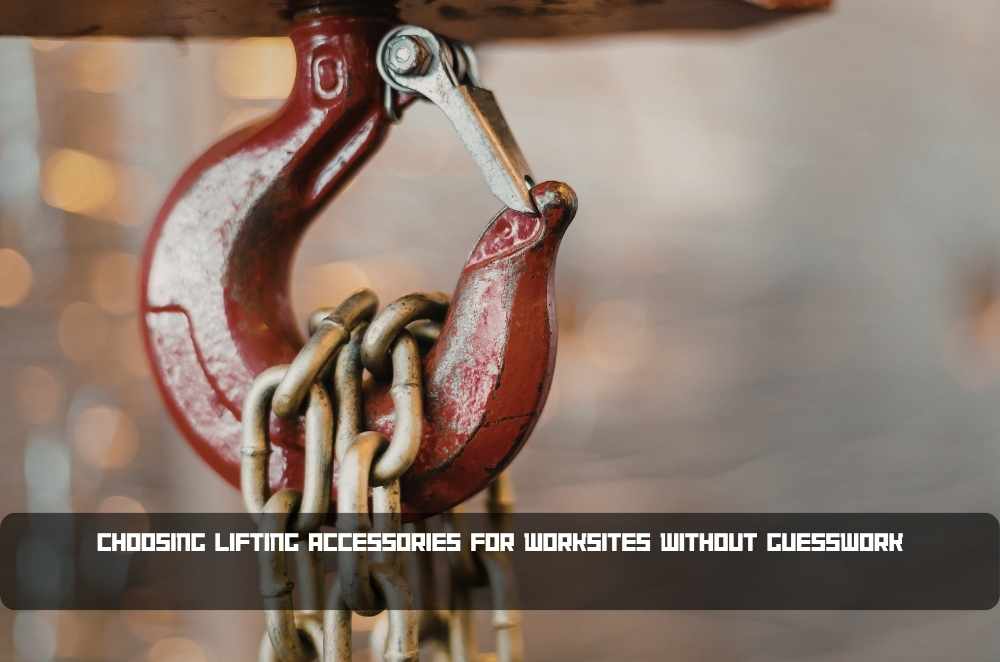
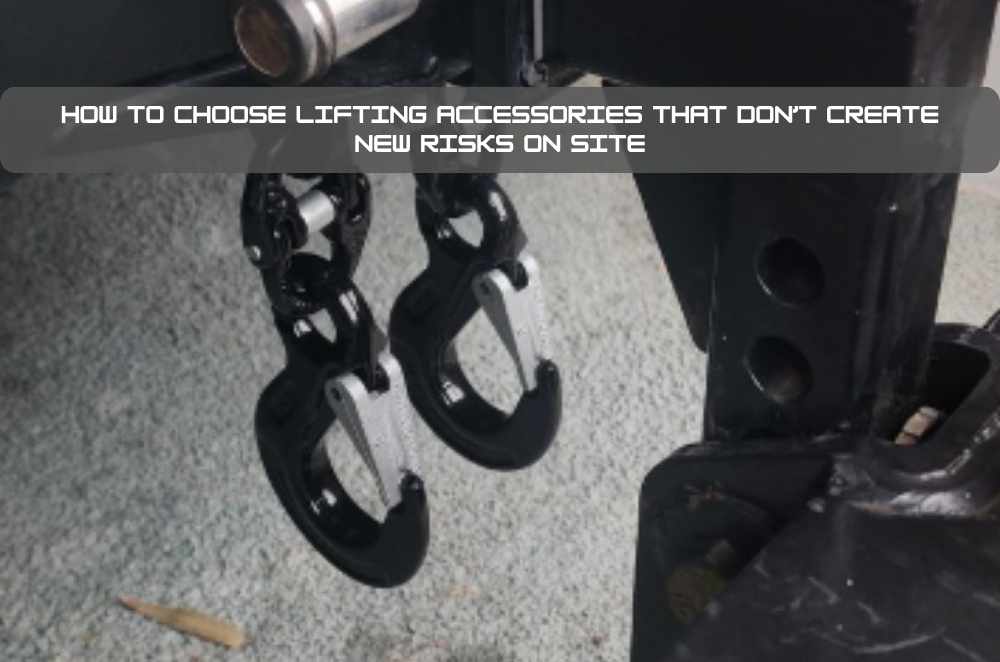
Compatibility and configuration matter too, slings, chains, shackles, swivels, hooks, and latches are part of a system, and the weakest link often isn’t the one you’re staring at.
Procurement choices also affect inspection workload: if you buy mixed batches with inconsistent markings, you’ll spend more time proving what you have and when it was last verified.
Finally, capability matters: decide what can be done reliably as a pre-use check by operators, what should be a periodic inspection by a competent person, and what needs formal verification/testing by qualified providers.
Building a simple inspection system that people will actually use
If you want this to work, reduce it to three layers: pre-use checks, scheduled periodic inspections, and trigger-based inspections (after overloads, incidents, modifications, or unusual exposure).
Create a register that lists each item’s unique ID, type, WLL/SWL (as marked), location/owner, inspection interval, last inspection date, next due date, and where the record lives.
Put the “next due” date where the gear is stored or issued, not buried in admin folders.
Use consistent naming so a sling is always the same sling in every system: tag, register, inspection report, and disposal record.
Define pass/fail criteria in plain language so operators know what to do when something looks wrong, including quarantine steps and who has authority to remove items from service.
How to compare providers and tools without guessing
A good inspection provider explains scope: what’s included (visual, dimensional, NDT where relevant, tagging, reporting), what’s excluded, and how non-conformances are handled.
Ask how they identify items with missing markings, and what they do when gear can’t be verified, because that’s where schedules often break down.
Confirm turnaround times and how records are delivered, because a PDF in an email is not a system unless it reliably lands in your register.
For site teams, the “tool” choice is often less about software and more about process discipline: a shared register, controlled tags, and one person accountable for the due-date rhythm.
Pick an approach that survives your busiest fortnight, not your quietest one.
A simple first-actions plan for the next 7–14 days
Day 1–2: Walk your lifting gear storage and active work areas, and list every lifting and rigging item that is currently in circulation.
Day 2–3: Assign unique IDs where needed, capture photos of markings, and sort gear into categories (slings, chains, shackles, hooks, lifting beams/spreaders, accessories).
Day 3–5: Write a one-page site rule that defines pre-use checks, periodic inspections, and trigger events, including quarantine steps for suspect gear.
Day 5–7: Build a register with next-due dates, then pick inspection intervals by category using usage, environment, and criticality as the deciding inputs.
Day 7–10: Choose who owns the system (one name, not a committee), and confirm where records live so anyone can find them during a shift or audit.
Day 10–14: Run a small “mock audit” on five random items to test whether tags, register entries, and reports match, then fix the gaps immediately.
Operator Experience Moment
On real sites, the biggest failures aren’t technical, they’re handover failures where nobody is sure who checked what, when, or against which criteria.
I’ve watched teams do great work for months, then lose confidence because one missing tag created doubt about an entire batch of gear.
When the register and tagging are simple and consistent, crews stop debating and start acting quickly when something looks off.
Local SMB mini-walkthrough (Sydney, NSW)
A small steel-fab shop in Western Sydney runs two shifts and shares lifting accessories across bays.
They start by listing every sling, shackle, and chain set currently in the tool cage and on the floor.
They add unique IDs and create a single register that lives in a shared drive and is mirrored on a clipboard at the cage.
They set different intervals for “daily-use” gear versus “occasional-use” gear, based on exposure and load patterns.
They introduce a quarantine hook and a simple red tag so questionable items are removed without debate.
They schedule periodic inspections to line up with fortnightly maintenance, reducing disruption and missed due dates.
Practical opinions
Make the register the “source of truth,” then make everything else point back to it.
Don’t chase perfect intervals on day one, chase consistency and traceability first.
If an item can’t be identified or verified, treat it as a process defect, not a paperwork annoyance.
Key Takeaways
Inspection frequency should reflect usage, environment, and lift criticality, not a one-size-fits-all rule.
Separate pre-use checks, periodic inspections, and trigger-based inspections so responsibilities stay clear.
A simple register with unique IDs and next-due dates prevents most “we thought it was checked” moments.
Provider choice should prioritise scope clarity, record delivery, and non-conformance handling, not just price.
Common questions we get from Aussie business owners
Q1: How do we decide inspection frequency if we don’t have a formal system yet?
Usually the fastest path is to start with a basic register, then assign initial intervals by grouping gear into “high-use/high-exposure” and “low-use/controlled storage.” Next step: pick five representative items and trial your intervals for two weeks, adjusting based on what you actually find. In Sydney, coastal air and wet outdoor work can accelerate corrosion, so exposure deserves extra weight in your first pass.
Q2: What’s the difference between a pre-use check and a periodic inspection?
In most cases a pre-use check is a quick visual/functional check by the operator before use, while a periodic inspection is a more structured check against documented criteria by a competent person (and may involve additional methods depending on the item). Next step: write a one-page rule that lists what operators must check and what gets escalated to periodic inspection. In NSW workplaces, clear role separation helps prevent “everyone assumed someone else did it.”
Q3: What should we do when a tag is missing or the markings can’t be read?
Usually the safest approach is to quarantine the item until it can be positively identified and verified, because you can’t manage an interval you can’t prove. Next step: create a quarantine station and a simple red-tag process so suspect gear is removed without argument. On many Sydney sites with subcontractors, missing IDs are common after gear moves between crews, so the quarantine rule needs to be enforced consistently.
Q4: How do we make sure the system doesn’t fall apart during busy periods or shutdowns?
It depends on whether the process is built around one person’s memory or around a visible schedule that anyone can follow. Next step: align periodic inspections to an existing rhythm (fortnightly maintenance, monthly WHS checks, or pre-shutdown prep) and run a quick random sample check each cycle. In most cases, tying inspections to a calendar event works better than relying on “when we get time,” especially with Sydney’s stop-start project timelines.




Write a comment ...