
When a project hits the point where hauling heavy loads by hand starts dragging schedules, it’s time to consider smarter lifting. This material hoist hire guide explains how hiring delivers flexibility without the upfront hit, especially on smaller sites that only need gear for a defined phase. It cuts labour strain, lowers injury risk, and keeps productivity humming without blowing the budget. Crews move bricks, sheeting, and tools quickly, saving energy for skilled work instead of stair schleps. Safety improves, too: controlled vertical movement means fewer slips on ladders and scaffolds. For many builders, hoist hire is the practical balance between cost control and steady, dependable progress on Australian sites.
How does material hoist hire improve efficiency?
Material hoist hire improves efficiency by moving loads vertically faster with less fatigue. It shortens lift cycles and keeps schedules predictable.
On most jobs, bottlenecks appear when trades spend time carrying instead of installing. Hoists change that rhythm: stairs stay clear, materials arrive intact, and lift timings become consistent enough to plan around. The result is less downtime, fewer ad-hoc lift queues, and smoother sequencing between levels. Supervisors can book deliveries to match lift capacity, while crews conserve energy for precision work. For sites racing tenancy dates or weather windows, these minutes stack into days—especially when paired with compact systems such as ladder hoist site speed.
Quick wins
Cut time on repetitive lifts
Free skilled labour for installs
Reduce manual handling injuries
What makes ladder hoists practical on tight-access sites?
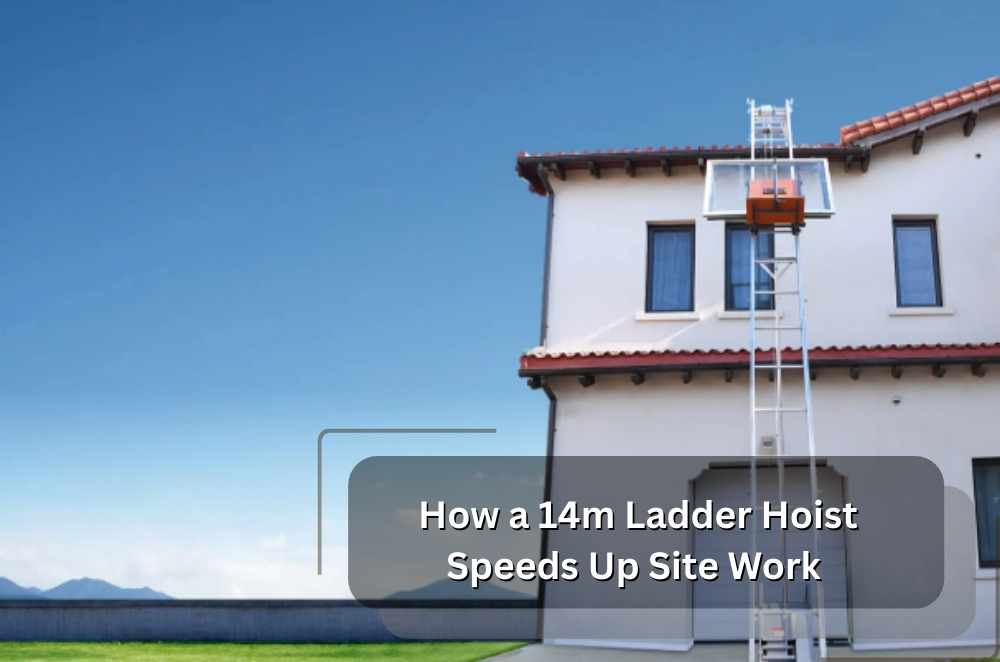
Ladder hoists suit tight-access sites because they’re compact, quick to set up, and need minimal groundwork. They operate where cranes and telehandlers can’t.
In laneways, terraces, or inner-city refurbs, rails hug the facade while carriers ferry bricks, sheet goods, and small plants with a steady cadence. That means fewer permits, less street disruption, and a tidier footprint. Planning is simpler, too: predictable lift rates help forepersons stage tasks floor-by-floor without clogging stairwells. Crews appreciate glove-friendly controls and stable platforms that reduce fiddly handling on upper levels. For small builders juggling multiple trades, consistent hoisting beats ad-hoc labour lines every day of the week.
Selection tips
Match height and payload to the task
Keep load zones barricaded and signed
Prefer simple, glove-friendly controls
Why does safe handling matter in hoisting?
Safe handling matters because rushed or overloaded lifts cause injuries and stoppages. Strong habits prevent incidents and protect materials.
We keep three anchors front and centre: correct ratings, clear load paths, and routine checks of rails, carriers, and controls. Tag lines steady swinging loads; exclusion zones keep bystanders out; and communications stay simple—one operator, one signal plan. Done right, safety speeds the job by reducing rework and uncertainty. Good practice isn’t guesswork either; resources like material handling essentials align with guidance from safety regulators that prioritise engineered controls over brute force. Build a repeatable pre-use checklist, keep a log of inspections, and revise the lift plan whenever site conditions change.
Safety must-dos
Inspect rails, carriers, and anchorage
Confirm SWL and distribute loads evenly
Establish exclusion zones and tag lines
Nominate one controller and hand signals
Conclusion
Hoists aren’t just about lifting; they’re about building a calm, dependable workflow. Hiring adds flexibility, trims costs, and lets crews focus on the craft rather than the carry. With compact ladder systems, solid planning, and disciplined handling, timelines tighten, sites stay orderly, and handovers arrive without last-minute scrambles. When vertical movement becomes routine and predictable, the entire program feels lighter—because it literally is.



Write a comment ...